
Many businesses ask this question when looking for software that can handle both financial operations and customer relationship management. The short answer? NetSuite is both. It’s primarily an ERP (Enterprise Resource Planning) system with built-in CRM (Customer Relationship Management) capabilities, giving companies a single platform to manage everything from accounting to customer engagement.
But what does this actually mean for your business? Our Lineal CPA team is here to break it down for you.
What Is ERP?
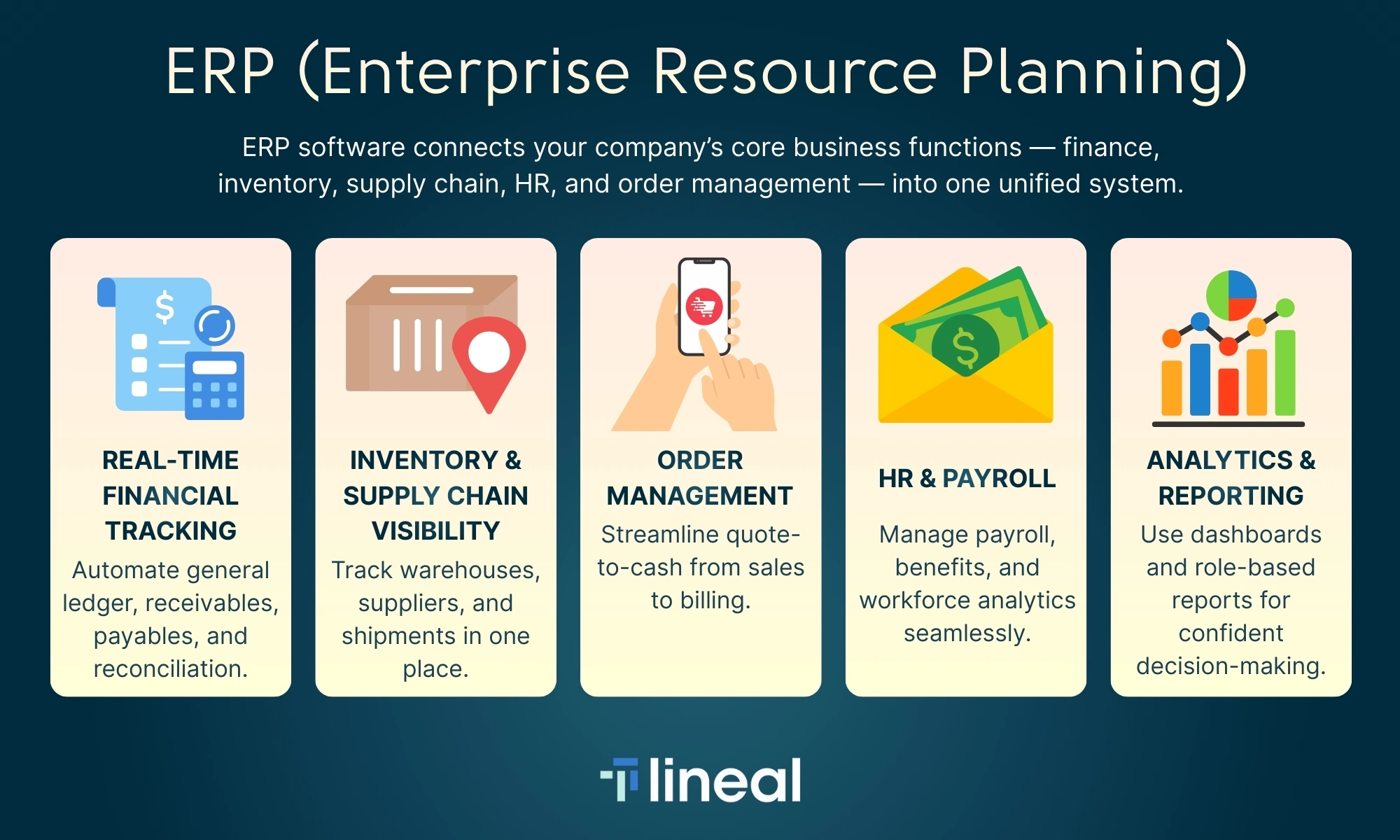
ERP (Enterprise Resource Planning) is software that centralizes core business functions, like financial management, inventory management,supply chain processes, human resources, and order management, into one system.
Instead of juggling separate tools for accounting, payroll, and purchasing, an ERP system connects them all. As a result, the leadership team can make smarter, data-driven decisions because every department works from the same real-time information.
NetSuite ERP is one of the most popular ERP solutions for small to mid-sized businesses (and even global enterprises).
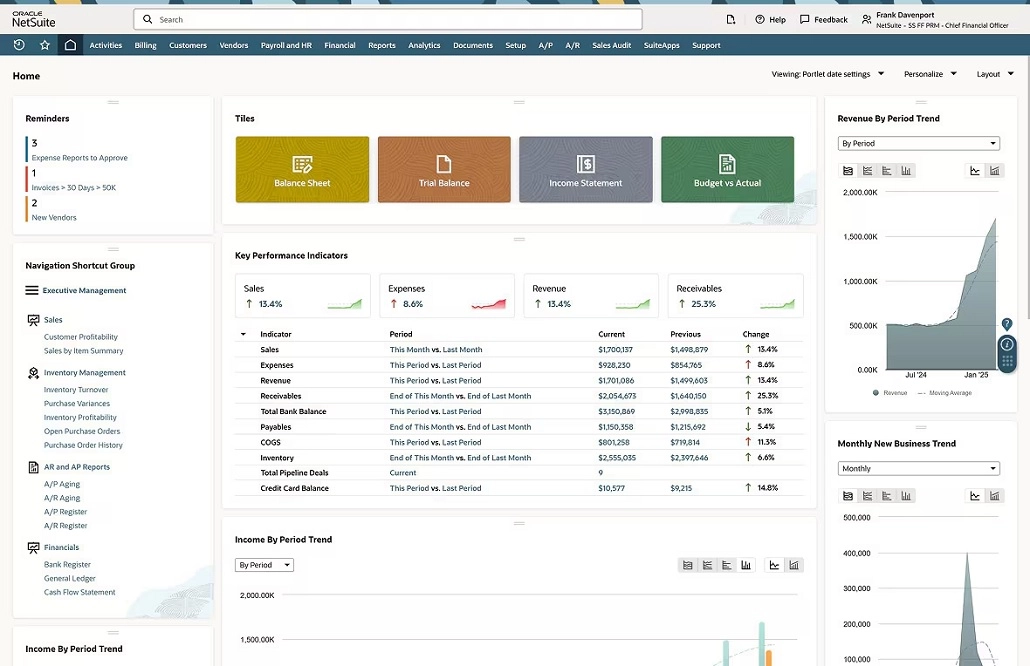
It’s known for:
- Real-time financial tracking: Automated general ledger, accounts receivable/payable, and bank reconciliation.
- Inventory and supply chain management: Visibility across warehouses, suppliers, and shipments.
- Order management: Streamlined quote-to-cash workflows that integrate sales, fulfillment, and billing.
- HR and payroll: Manage payroll, benefits, and workforce analytics within one system.
- Built-in analytics and reporting: Custom dashboards and role-based reports for better decision-making.
In short, NetSuite’s ERP software manages your core business functions and can help strengthen the backbone of your operations.
What Is CRM?
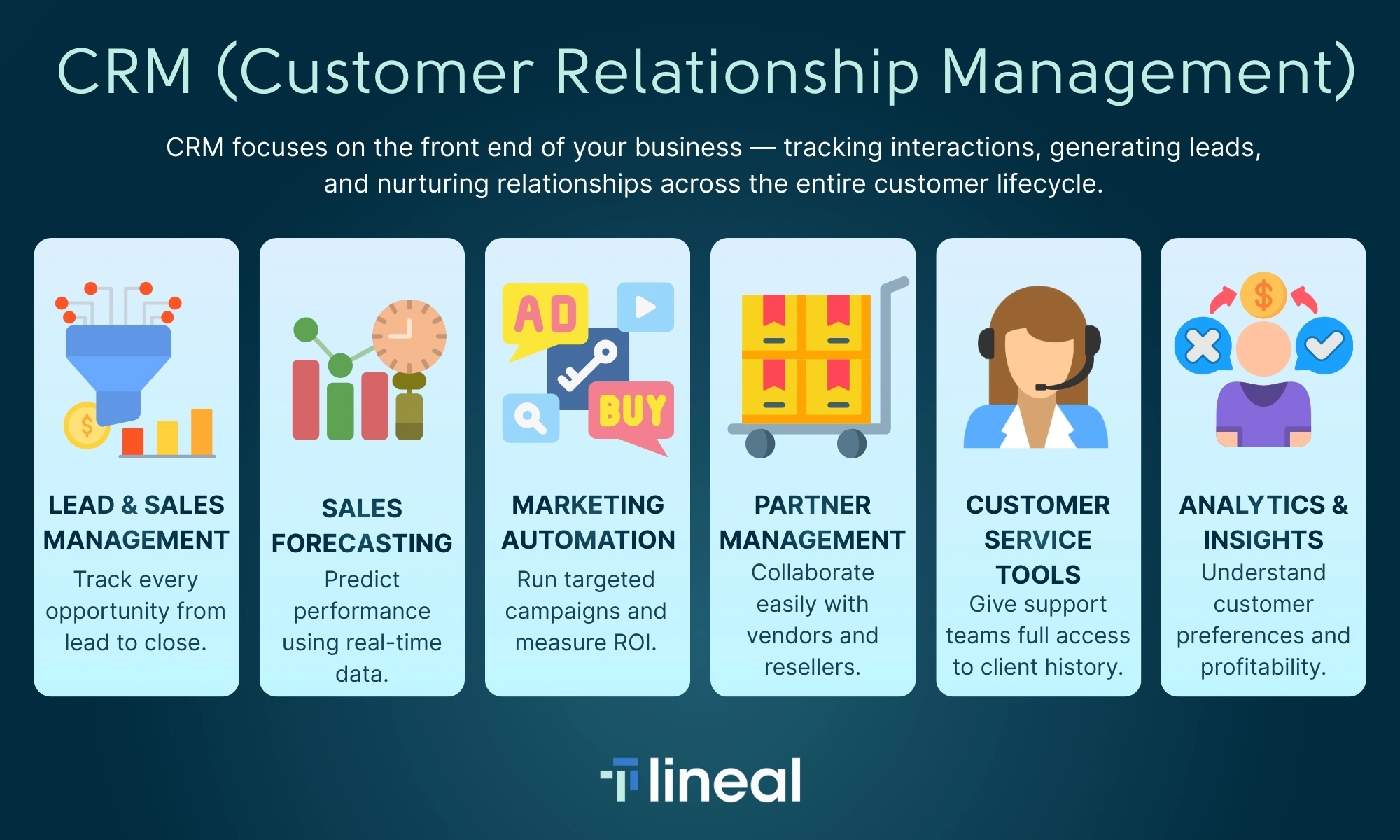
CRM (Customer Relationship Management) focuses on the front end of the business, where you interact with customers, generate leads, and close deals.
A CRM system helps sales, marketing, and customer service teams track every interaction across the entire customer lifecycle, from the first touchpoint to post-sale support.
NetSuite CRM extends this functionality beyond traditional CRM solutions. It doesn’t just track customer data; it connects that information with financial, order, and inventory data in the ERP system.
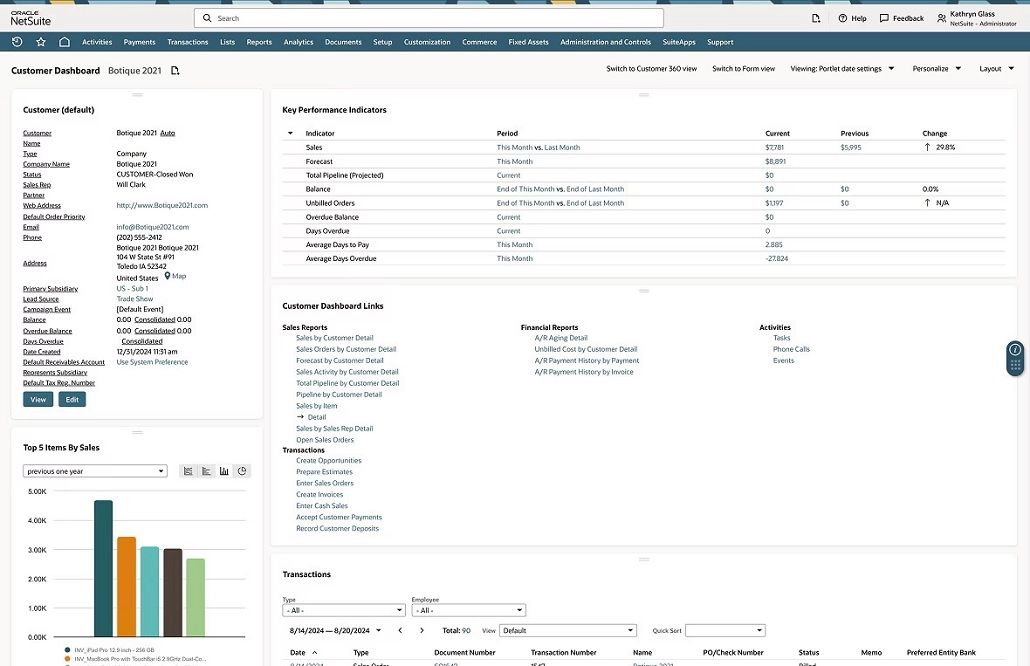
NetSuite CRM capabilities include:
- Lead and sales management: Track leads, opportunities, and sales activity from start to finish.
- Sales forecasting: Build accurate sales forecasts using real-time data and past performance.
- Marketing automation: Create specific marketing campaigns, manage email outreach, and measure results.
- Partner relationship management: Collaborate with vendors, distributors, and resellers.
- Customer service management: Help support teams deliver better experiences using complete customer information.
- Analytics and reporting: Gain insights into customer preferences, engagement, and profitability.
This integrated approach has massive benefits. It means your sales and marketing teams, finance department, and customer service teams all work from the same data — no more silos or manual updates.
#cta_start
Unlock the Full Power of NetSuite
Find out whether NetSuite ERP and CRM are right for your business. Talk to our specialists today for a customized analysis and pricing overview.
#cta_end
NetSuite: CRM or ERP?
NetSuite is both a CRM and an ERP, designed to bridge the gap between front-end customer management and back-end operations.
Here’s the simplest way to think of it:
- ERP = Internal efficiency. It manages your money, inventory, and operations.
- CRM = External relationships. It manages your customers, sales pipeline, and marketing campaigns.
Most businesses use one or the other — but NetSuite combines them in a single platform, giving you a 360-degree view of your organization.
This unified model ensures that when a sales rep closes a deal, the information automatically flows into financial management and inventory systems. No duplicate data entry. No lost information between departments.
Why Businesses Choose NetSuite’s Unified Platform
Many businesses start with CRM systems and later add ERP software as they grow. But using separate point solutions can create data silos and operational headaches.
NetSuite eliminates this problem by connecting customer interactions, financial data, and operational performance within one system.
Key benefits include:
- Improved customer satisfaction: Teams access the same customer history and preferences.
- Faster sales cycles: Real-time visibility into pricing, inventory, and orders speeds up deals.
- Better financial insight: Integrated analytics reveal how customer relationships affect profitability.
- Efficient business processes: Automate workflows across departments and reduce manual data entry.
- Scalability: As your company grows, NetSuite scales with you, supporting additional users, subsidiaries, and currencies.
This is why more organizations see NetSuite as the ideal solution for mid-sized businesses and enterprises seeking to unify sales performance, financial planning, and supply chain management.
CRM vs. ERP: The Key Differences in NetSuite
If you’re still comparing CRM vs ERP, here’s a quick summary:
With NetSuite, you don’t have to choose, as this one platform covers both sides of your business.
How Much Does NetSuite Cost?
NetSuite pricing depends on your company’s size, modules, and number of users. Most clients pay an annual license fee based on the selected ERP and CRM features. There’s also an initial setup cost for ERP implementation and training.
While pricing varies, working with certified NetSuite consultants can help you determine the right configuration and avoid paying for unnecessary modules. The flexibility of subscription-based pricing makes it accessible to both growing and established businesses.
Get Expert NetSuite Guidance from Lineal CPA
NetSuite is a powerful, cloud-based platform that unifies enterprise resource planning and customer relationship management into one solution. For companies juggling multiple systems to handle sales pipelines, financial management, and supply chain operations, NetSuite offers a smarter, simpler way to manage it all — with analytics, built-in reporting, and automation that drive efficiency and growth. Need help navigating this landscape? We’re here to help.
At Lineal CPA, we help businesses implement NetSuite to strengthen their financial and operational performance. Our team of NetSuite consultants has over a decade of hands-on experience, and we understand how to align your business model, financial systems, and CRM processes for maximum ROI. Whether you’re exploring NetSuite ERP, CRM integration, or overall system optimization, schedule a call, and we’ll guide you every step of the way.



![[info]](https://cdn.prod.website-files.com/6772960017ecc0c894e0d432/68cbb28f5afa469260679b55_NetSuite%20vs%20QuickBooks%20When%20and%20Why%20to%20Switch.avif)
